Corner of Benton Street and Pacific Avenue
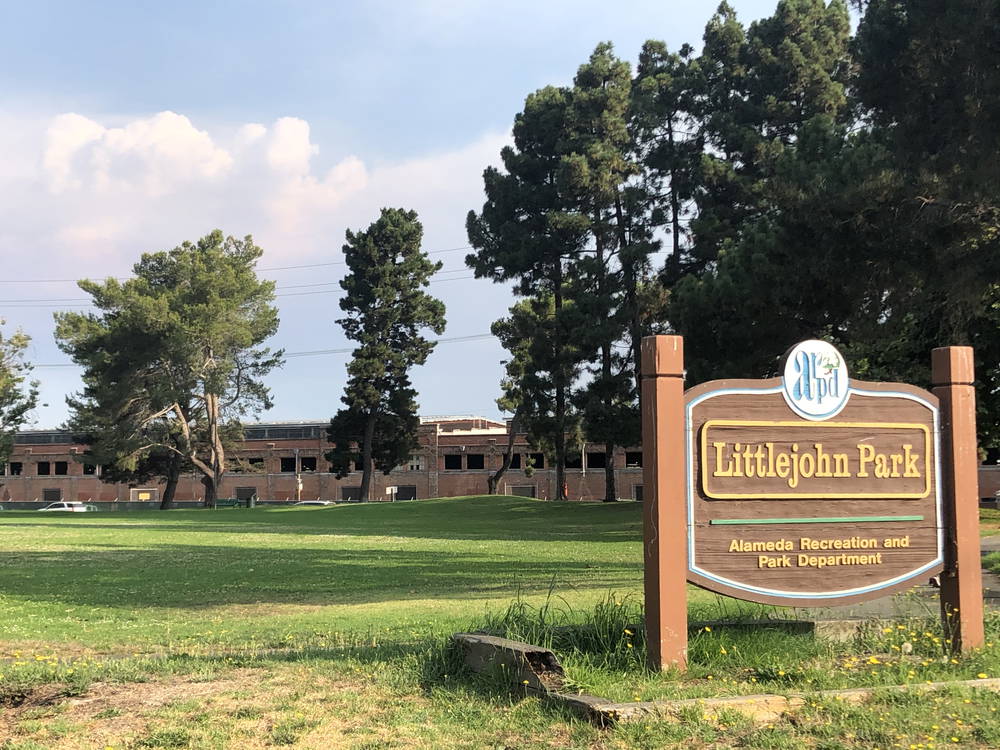
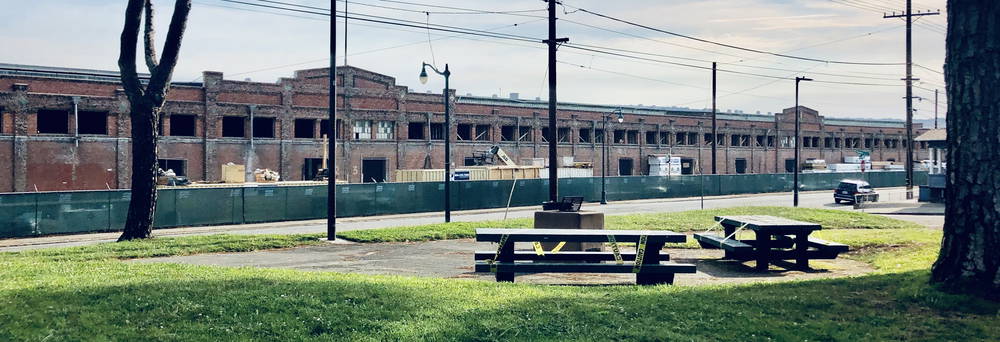
Standing at the corner of Benton and Pacific Ave. in Littlejohn Park. Look down Pacific Ave. you can see a row of three Victorians that were moved here in the 1920s, when the industrial waterfront railroad went through - called the Beltline - and they built the large Del Monte Warehouse right behind, across Buena Vista Ave.
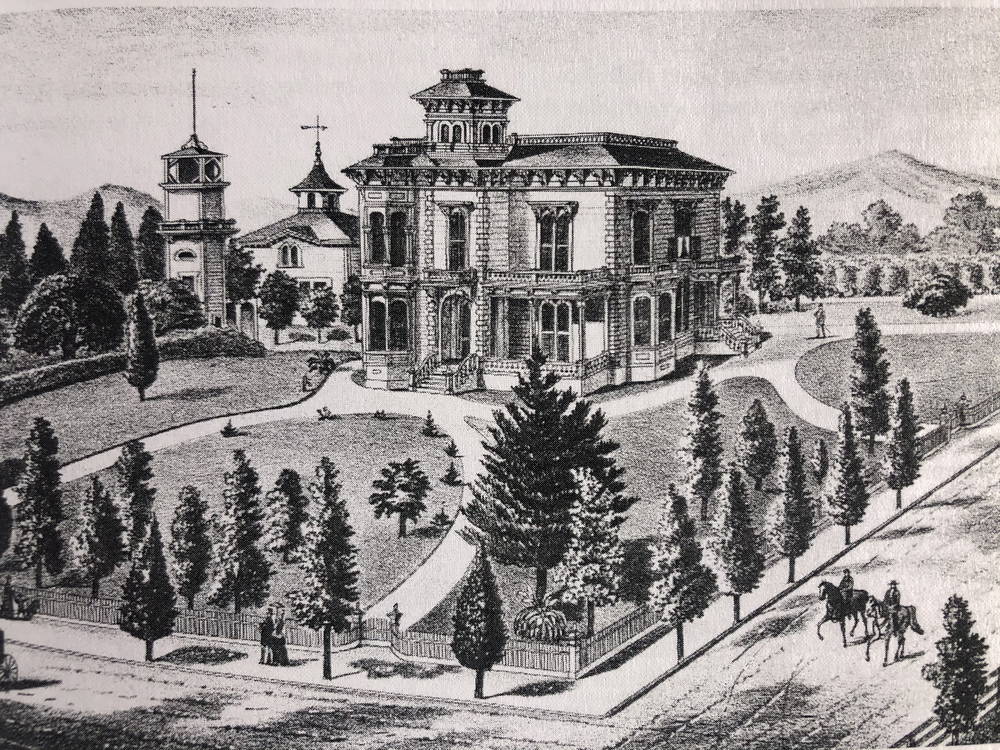
Right across the street was the Fitch's family second house, an Italianate Villa built in 1877. Mary Fitch became very wealthy from subdividing and selling her land. The mansion was bounded by Sherman, Benton, Pacific and Lincoln, and its grounds covered the block ,and her lands radiated out.
And on the next block over, between Benton and Sherman to Bay, was another landholding of Nathaniel Paige, a retired lumber merchant, who was one of the early purchasers of a big chunk of Fitch land. He subdivided his land as well.
In the meantime, it wasn't all house development. Alameda was also a well known agricultural community, since the Gold Rush. And this whole block, where Littlejohn Park is now, was covered with crops - vegetable gardens - and they were farmed by Italian immigrant farmers, the Perata family. They had a big farmhouse that stood where the Del Monte Warehouse is. The farm fields extended before the industrial development.
So we have houses happening, and also farmland.
That all came to a sudden end in World War II, when land and housing were at a premium. An emergency war housing project went in on this block, for shipyard workers, and it was here for the duration of the war. After they tore those down they paved the property for a parking lot for Del Monte workers, and then finally the City developed it as a park in the 1970s.
Note the row of Marcuse & Remmel houses on the 1300 block of Pacific - one of their finest rows - almost came down for the park, but there was an environmental impact report which found them to be important and significant, so they were saved from demolition. This is one the best architectural preservation stories in Alameda.